
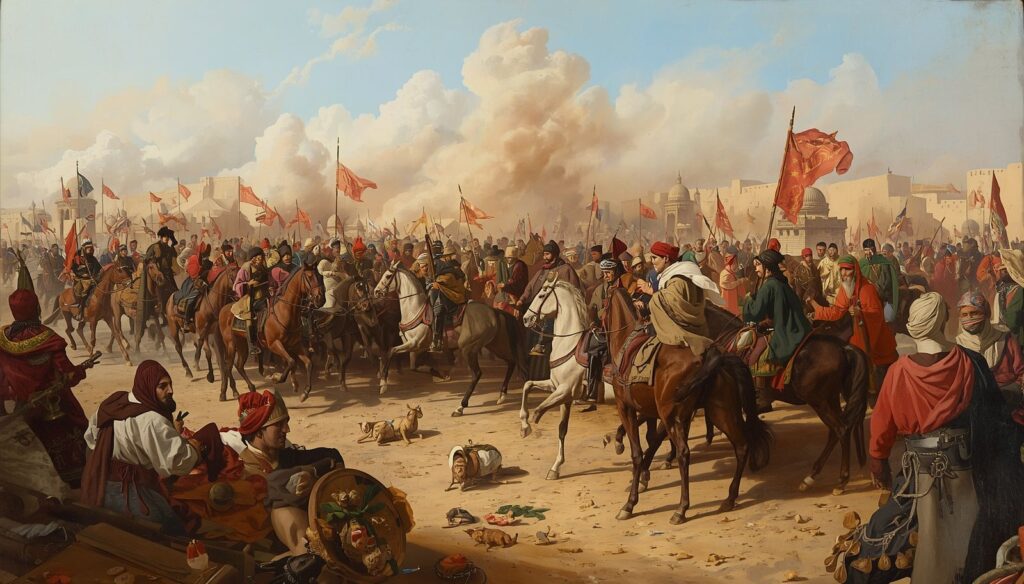
Introduction: The Universal Language of Sacrifice
The Battle of Karbala, fought on October 10, 680 CE, on the sun-scorched plains of what is now central Iraq, stands as one of the most consequential and emotionally charged events in the entire history of Islam. When Imam Husayn ibn Ali — the grandson of the Prophet Muhammad — refused to pledge allegiance to the Umayyad Caliph Yazid, he made a choice that would permanently fracture the Muslim world and birth a tradition of mourning that endures 1,300 years later.
His small band of roughly 72 companions, surrounded and denied water for three days, faced an army that outnumbered them by the thousands. The martyrdom of Husayn was not merely a military defeat — it became the theological heartbeat of Shia Islam and the moral foundation of the annual Ashura commemoration, observed by hundreds of millions of Muslims worldwide to this day.
What Was the Battle of Karbala? (The Short Answer)
The Battle of Karbala was a military confrontation that took place on 10 Muharram, AH 61 — which corresponds to October 10, 680 CE — near the city of Karbala in modern-day Iraq, approximately 50 miles southwest of Baghdad.
On one side stood Husayn ibn Ali, the grandson of the Prophet Muhammad, along with roughly 72 companions and family members. On the other side stood an Umayyad Caliphate army numbering between 4,000 and 30,000 soldiers (sources vary), dispatched by the Umayyad governor Ubayd Allah ibn Ziyad under the authority of Caliph Yazid ibn Muawiya.
The outcome was not a military mystery. His half-brother Abbas ibn Ali died defending a water supply. His teenage son was cut down in battle. The women and children in his group — including his sister Zaynab bint Ali — were taken prisoner and marched to Damascus.
By every conventional military measure, it was a total defeat.
And yet the Battle of Karbala is not remembered as a defeat. In the 1,300-plus years since that day, it has become the most commemorated event in Shia Islamic history — a story that defines what it means to resist injustice even when resistance means death. The significance of Karbala has never faded. If anything, it has grown.
The Historical Context — Why This Happened
Understanding Karbala requires understanding what was at stake in early Islamic history. The Prophet Muhammad died in 632 CE without leaving an unambiguous written designation for who should lead the Muslim community. This question — who holds legitimate authority in Islam — became the crack in the foundation that eventually split the religion in two.
Husayn’s father, Ali ibn Abi Talib, was the fourth caliph, and his supporters (the Shia, from “Shi’at Ali,” meaning “partisans of Ali”) believed that leadership of the Muslim world rightfully belonged to the Prophet’s family. The Umayyad Caliphate, based in Damascus and founded under Muawiya I, represented a very different model: hereditary, dynastic, and in the view of many, increasingly detached from the moral vision of early Islam.
When Muawiya I died in 680, he passed the caliphate to his son Yazid ibn Muawiya — a man whose personal conduct was, by most historical accounts including those of Sunni historians, far from the example of the Prophet. This hereditary transfer was itself a rupture from earlier Islamic tradition. And when Yazid demanded bay’ah — a formal oath of allegiance — from leading Islamic figures, Husayn ibn Ali refused.
His refusal was not impulsive. It was principled. To pledge allegiance to Yazid, in Husayn’s view, was to legitimize a corrupt authority as the representative of Islam. He reportedly said words that have echoed through centuries of Islamic scholarship: “A man like me cannot pledge allegiance to a man like him.”
At the same time, thousands of Muslims in Kufa — a city in what is now Iraq — were sending letters to Husayn, pledging their support and urging him to come lead them. He decided to travel toward Kufa with his family and a small group of companions. He was intercepted before he arrived.
The Journey to Karbala — Key Figures and Events
Husayn ibn Ali
Husayn ibn Ali was born around 626 CE, the second son of Ali ibn Abi Talib and Fatimah al-Zahra — the daughter of the Prophet Muhammad. He grew up in the household of the Prophet himself, and early Islamic accounts describe Muhammad expressing profound love for him. In Shia tradition, Husayn is regarded as the third Imam, a figure of spiritual authority whose life embodied Islamic values of justice, dignity, and truth.
By 680 CE, Husayn was in his mid-fifties and had lived through the assassination of his father and the death of his older brother Hasan. He was not a naive idealist about political violence.
Yazid ibn Muawiya
Yazid ibn Muawiya is one of the most controversial figures in Islamic history. Born in 645 CE, he inherited the caliphate from his father and is remembered in Shia tradition as a symbol of tyranny and corruption. Sunni historians are more varied in their assessments, but even many Sunni scholars have recorded critical views of his character. His response to Husayn’s refusal was to send the military.
Ubayd Allah ibn Ziyad
Ubayd Allah ibn Ziyad was the Umayyad governor of Kufa and the man directly responsible for intercepting Husayn before he could reach the city. He is also responsible for arresting and executing Muslim ibn Aqil, Husayn’s envoy whom the Kufans had promised to protect. When the Kufans saw their promised protector arrested and killed, most of them backed away from their pledges to support Husayn — leaving him exposed, betrayed, and surrounded.
Al-Hurr ibn Yazid al-Tamimi
One of the most striking figures in the Karbala narrative is a man named Al-Hurr ibn Yazid al-Tamimi, a commander in the Umayyad force who had initially intercepted Husayn’s caravan. According to most accounts, as the moment of battle neared, Hurr experienced what could only be described as a moral crisis. He defected — crossed the battlefield, apologized to Husayn, and joined his side, knowing full well he would die. He did. He is remembered as a symbol of redemption, of the fact that it is never too late to choose conscience over compliance.
If you are a Christian, you may find something in Hurr’s story that echoes in your own tradition.
Abbas ibn Ali
Abbas ibn Ali, Husayn’s half-brother, became famous specifically for an act of care rather than violence. When the Umayyad forces cut off the Euphrates River water supply to Husayn’s camp — leaving children, women, and the sick without water for three days in the desert heat — Abbas made repeated attempts to bring water through enemy lines. He was killed on his final attempt, his arms cut off, water containers struck down before he could return. He is venerated in Shia tradition as a symbol of loyalty and selfless service.
The Day of Ashura — What Happened on October 10, 680 CE
10 Muharram — the day Muslims call Ashura — began with one final attempt at negotiation. Husayn reportedly addressed the Umayyad troops directly, reminding them who he was, asking them to consider what they were about to do. The accounts suggest some soldiers wept. None crossed over except Hurr.
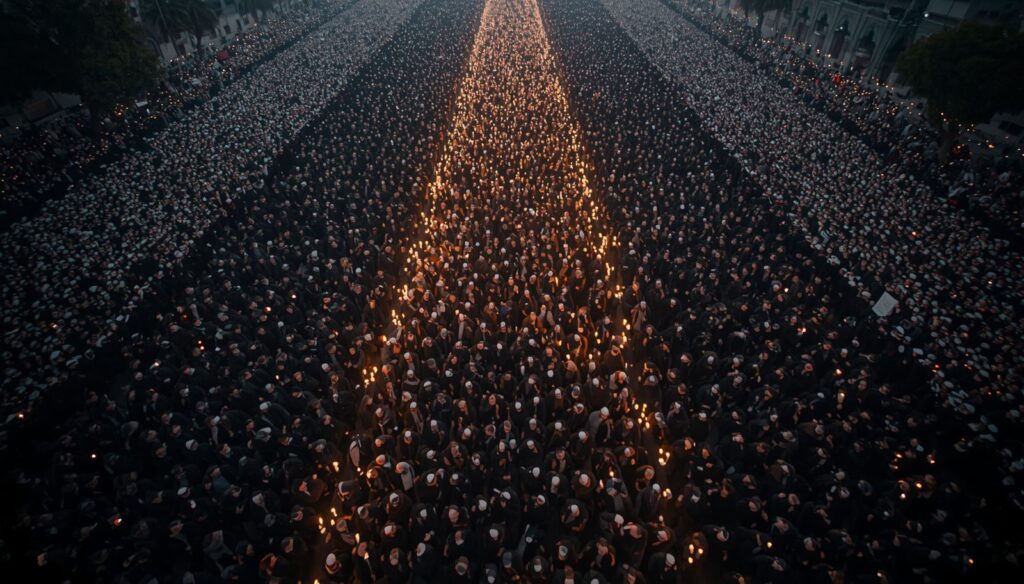
The battle itself, by military standards, was brief. Husayn’s companions fought with exceptional courage, but the outcome was mathematically predetermined. One by one, his companions and family members fell. His teenage son, Ali al-Akbar, died in battle. Qasim ibn Hasan, Husayn’s nephew, was killed. Abbas ibn Ali was killed at the river. By afternoon, Husayn himself — weakened, surrounded, and having watched those he loved die — was killed. Accounts describe him prostrating in prayer as the final blow came.
The women and children, including his sister Zaynab bint Ali, were captured. His head was separated and brought to the governor. The significance of Ashura in Shia tradition begins here — not just as a military defeat, but as a moral testimony written in blood.
The Karbala-Calvary Parallel — What Christians Can Recognize Here
This is where the conversation often becomes genuinely surprising for Christian readers.
The structural parallels between the Passion of Christ and the martyrdom of Husayn at Karbala are not superficial. They are deeply embedded in the moral logic of both events, and scholars — including non-Muslim Western historians — have noted them for centuries.
Consider:
Both figures faced an illegitimate authority demanding submission. Jesus stood before Pontius Pilate and refused to save himself by compromising his testimony. Husayn stood before the forces of Yazid and refused to save himself by compromising his allegiance to truth. Both could have walked away. Neither did.
Both were betrayed by people who had pledged their loyalty. The Kufans who had invited Husayn, then abandoned him when the cost became clear, have been compared to the disciples who fled when Jesus was arrested. The specific treachery of Ibn Ziyad’s arrest of Muslim ibn Aqil — Husayn’s trusted representative — echoes the betrayal dynamic familiar to any Christian.
Both events are commemorated with dramatic passion plays. Britannica itself notes that the Taʿziyyah — the dramatic reenactments performed by Shia communities to commemorate Karbala — are explicitly compared by scholars to “Christian passion plays.” The emotional register is the same: grief, remembrance, and the belief that suffering for truth is not meaningless.
Both traditions affirm that the moral victor was the one who died. Christianity teaches that the crucifixion was not God’s defeat but humanity’s salvation — that what appeared to be Roman triumph was, in cosmic terms, something else entirely. Shia Islam holds almost precisely the same reading of Karbala: that Husayn’s martyrdom was not Yazid’s victory but the beginning of Yazid’s undoing. Within two generations, the Umayyad Caliphate had collapsed.
None of this means Karbala and Calvary are the same event, or that Islam and Christianity are the same religion. The theological frameworks are genuinely different. But for a Christian trying to understand why Karbala matters, the emotional and moral architecture is already familiar.
Why Husayn Refused — The Theological and Moral Core
Some people assume Husayn made a political miscalculation — that he underestimated Yazid’s willingness to use violence, or that he expected the Kufans to actually come through. The historical record does not clearly support this.
His letters, recorded in accounts by historians like Tabari and Baladhuri, indicate a man who had accepted that he was moving toward death and was doing so deliberately. He reportedly released his companions from obligation multiple times, telling them to leave under cover of night if they wished. All stayed.
The theological core of Husayn’s refusal is straightforward, even if its implications are enormous. Pledging allegiance to Yazid would have meant endorsing, with the authority of the Prophet’s family, a caliphate that had drifted far from Islamic values. For Husayn, that was not a political inconvenience — it was a spiritual impossibility. His name, his lineage, and his presence in the world carried weight. Using that weight to legitimize corruption was not something he was willing to do.
He is reported to have said: “I only rose up to seek reform in the community of my grandfather, the Prophet of God. I want to command what is right and forbid what is wrong.”
For Christians, this maps onto a long tradition of prophetic witness — the idea that there are moments when speaking truth to power is not optional but obligatory, regardless of cost. Think of the prophets of the Hebrew Bible. Think of Thomas More. Think of Dietrich Bonhoeffer. The moral category is the same, even if the theological language differs.
The Aftermath — How Karbala Shaped Islam
The immediate aftermath of Karbala was not silence. It was fury.
The sight of Zaynab bint Ali and the captive women being paraded through Kufa and then Damascus — and Zaynab’s remarkable speeches condemning Yazid publicly, in his own court — began to shift public opinion in the Islamic world. Her words are still quoted in Shia scholarship today. She said to Yazid, in his court, surrounded by his soldiers: “Do you think that by killing us you have silenced us? You have not. This moment will be remembered.”
She was right.
Within a few years, the Tawwabin movement (“the Penitents”) arose in Kufa among those who felt guilt for abandoning Husayn. Then came Mukhtar al-Thaqafi, who organized a more militarily effective campaign of retribution. The political and moral authority of the Umayyad Caliphate was permanently damaged. By the mid-eighth century, it had fallen to the Abbasid Caliphate, which had used the memory of Karbala — among other grievances — to mobilize opposition.
More profoundly, Karbala crystallized the Shia-Sunni theological divide. The Shia developed a distinct theology of Imamah — the belief that spiritual and political leadership of the Muslim world rightfully belongs to the descendants of the Prophet through Ali and Husayn. The annual mourning of Muharram, culminating on Ashura, became and remains the central observance of Shia religious identity. The significance of Karbala is, for Shia Muslims, not merely historical — it is liturgically present every year.
Sunni Muslims generally regard the killing of Husayn as a tragedy and a sin, though the theological weight they attach to it differs from Shia tradition. Most Sunni scholars acknowledge that Yazid’s forces committed a grave wrong. The Sunni-Shia divide over Karbala is not about whether what happened was evil — it is about the theological and institutional implications that follow.
Karbala Today — A Living History
The city of Karbala, Iraq, sits approximately 50 miles southwest of Baghdad and is home to the Shrine of Imam Husayn, one of the holiest sites in Shia Islam. Every year during Muharram, millions of pilgrims converge on Karbala — the Arbaeen pilgrimage, which marks 40 days after Ashura, is reportedly one of the largest annual human gatherings on Earth, sometimes exceeding 20 million people.
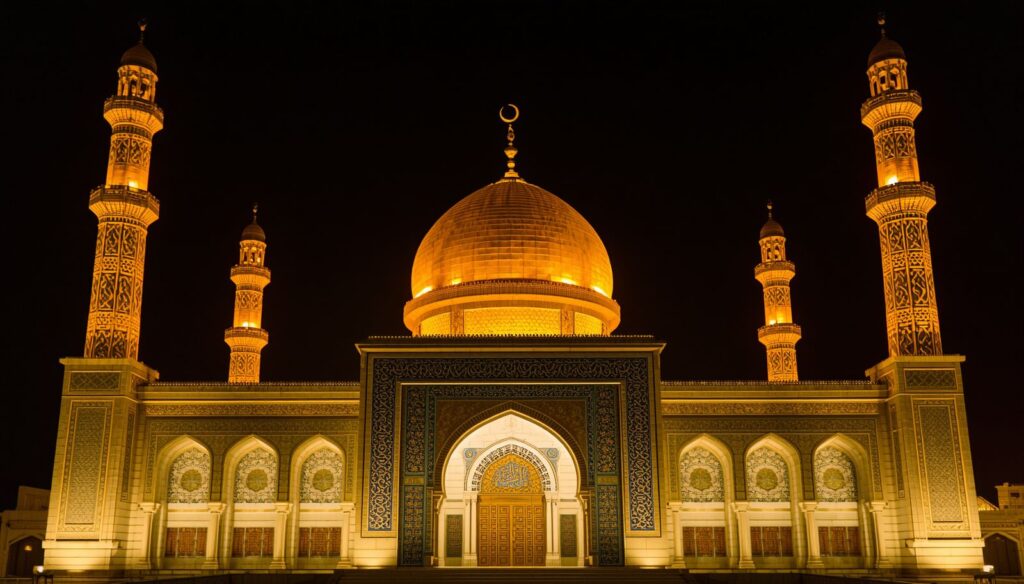
For Christians who follow news from the Middle East, Karbala has appeared in very different contexts — including the 2003 Battle of Karbala during the U.S.-led invasion of Iraq, when American forces fought to take the city from Saddam Hussein’s military, and the 2007 clashes between Shia factions during the broader sectarian conflict of the Iraq War.
The city is simultaneously an ancient holy site and a modern political pressure point. Understanding what Karbala means historically is essential to understanding why it continues to appear in global news.
What Christians Can Learn From Karbala
This is not a section about theological conversion or interreligious merger. It is simply an honest reflection on what the Battle of Karbala offers to Christian readers who engage with it seriously.
The universality of moral courage. Husayn’s stand against Yazid is not a story that requires you to be Muslim to understand. The refusal to endorse injustice, the willingness to bear personal cost for principle, the knowledge that history and conscience matter more than immediate survival — these are recognizable values in every serious moral tradition.
The power of grief as testimony. Shia mourning rituals during Muharram — the public lamentation, the processions, the passion plays — strike some Western observers as excessive or unfamiliar. But Christians who understand Good Friday know something about liturgical grief. The willingness to sit in sorrow rather than rush past it, to insist that a death matters and must be remembered, is something Christians and Shia Muslims share in form even when the content differs.
The complexity of Islamic identity. American Christians often encounter Islam as a monolith. Karbala immediately complicates that picture. The Sunni-Shia difference is not trivial, and understanding its roots in Karbala is foundational to any serious engagement with Muslim communities, Muslim-majority countries, or Muslim colleagues, neighbors, and friends.
The question of legitimacy and power. Husayn’s refusal raised a question that is perennially relevant: what makes authority legitimate? His answer was essentially — legitimacy requires moral accountability to the values it claims to represent. You cannot borrow the prestige of the Prophet’s family and use it to serve a tyrant’s agenda. This is not an exclusively Islamic question. It echoes in debates Christians have had about empire, church authority, and the relationship between faith and political power for two thousand years.
Frequently Asked Questions (FAQ)
Q: What is the Battle of Karbala in simple terms?
A: The Battle of Karbala was a massacre that took place on October 10, 680 CE, in what is now Iraq. The grandson of the Prophet Muhammad — Hussain ibn Ali — refused to swear loyalty to the Umayyad caliph Yazid because he considered Yazid’s rule corrupt and unjust. He was killed along with nearly all his male companions by a far larger Umayyad army. The event became the defining moment in Shia Islamic history and is commemorated annually on the day of Ashura.
Q: Why do Shia Muslims mourn during Muharram?
A: Muharram is the first month of the Islamic lunar calendar, and its tenth day (Ashura) is when the Battle of Karbala took place. Shia Muslims mourn during this period to commemorate the suffering and death of Husayn ibn Ali and his companions. The mourning is both a religious obligation and an act of solidarity with his sacrifice — an annual renewal of commitment to the values he died for.
Q: What is the difference between Sunni and Shia views of Karbala?
A: Both Sunni and Shia Muslims regard the killing of Husayn as a tragedy. However, Shia Muslims attach profound theological significance to it — Husayn is regarded as the rightful Imam (spiritual leader), and his martyrdom is a central element of Shia theology. Sunni Muslims generally mourn Karbala as a historical wrong but do not attach the same Imamah theology to it. Shia observe Ashura with public mourning; Sunni Ashura has a different historical significance relating to Moses.
Q: How many people died at the Battle of Karbala?
Husayn’s forces numbered approximately 72 to 145 fighters — primarily family members and close companions. The Umayyad army was estimated between 4,000 and 30,000 (most scholarly estimates favor the lower range). Virtually all of Husayn’s companions were killed; Umayyad casualties were far fewer.
Q: Is there a connection between the Battle of Karbala and Christianity?
A: There is no direct theological connection — the two traditions are distinct. However, there are striking structural parallels: both involve a righteous figure who died rather than submit to corrupt authority; both are commemorated with dramatic passion-style reenactments; and both traditions affirm that the moral victory belonged to the one who died, not the power that killed him. Scholars, including those cited by Britannica, have compared the Taʿziyyah (Shia passion plays) to Christian passion plays in their form and emotional function.
Q: Who was Yazid ibn Muawiya and why is he significant?
A: Yazid ibn Muawiya was the second caliph of the Umayyad dynasty, who inherited power from his father Muawiya I in 680 CE. His demand for allegiance from Husayn ibn Ali triggered the chain of events leading to Karbala. In Shia tradition, Yazid represents tyranny and corruption — his name is reviled as a symbol of unjust authority. Even some Sunni scholars have historically criticized him. He remains one of the most controversial figures in Islamic history.
Q: What happened to Husayn’s family after Karbala?
A: The surviving women and children, including Husayn’s sister Zaynab bint Ali and his son Ali ibn Husayn (who was too ill to fight), were taken prisoner and marched to Kufa and then Damascus. Zaynab is celebrated in Islamic tradition for her courage in publicly condemning Yazid in his own court. Ali ibn Husayn survived and continued the Imamate line in Shia tradition. The captives were eventually released and returned to Medina.
Q: What is Ashura?
A: Ashura falls on the 10th of Muharram in the Islamic lunar calendar — the same day as the Battle of Karbala. For Shia Muslims, it is the most solemn day of the year, marked by mourning processions, passion plays, communal prayer, and charitable giving. For Sunni Muslims, Ashura has a different significance related to a fast observed by the Prophet Muhammad to commemorate Moses crossing the Red Sea. The two meanings coexist separately in the Islamic world.
Q: Why did Husayn go to Kufa if it was dangerous?
A: Husayn received thousands of letters from the people of Kufa promising their support and loyalty. He sent his cousin Muslim ibn Aqil ahead to assess the situation; Muslim’s initial reports were encouraging. Husayn began the journey believing he had a genuine base of support.
However, the Umayyad governor Ubayd Allah ibn Ziyad moved quickly to suppress the Kufan support base, arresting and executing Muslim ibn Aqil. By the time Husayn was intercepted on the road, most of his promised support had evaporated. This mass abandonment is a recurring theme in Islamic reflection on Karbala — the betrayal of those who pledged support and then stepped back when the cost became clear.
Related posts: