
Introduction:
Two Line Motivational Shayari has earned a permanent place in the daily routines of students, entrepreneurs, and dreamers across Pakistan and India — not because it sounds inspiring, but because it tells the truth about effort before celebrating the result. After curating hundreds of kamyabi shayari verses for readers searching for genuine motivation rather than borrowed positivity, one pattern stands out: the shayari that resonates most never minimizes struggle; it honors it.
Mehnat shayari speaks to the rickshaw driver working through monsoon rain and the student studying through loadshedding, while Himmat shayari carries the quiet courage to rise after every setback. This collection brings together two-line verses on hard work, hardship, and success — written in the honest tradition of Urdu poetry, where the road is acknowledged as difficult, not disguised as easy. Whether you need words for a hard season or a hard-won win, success shayari in Urdu offers exactly that — language that has already walked the path you are walking now.
Two Line Motivational Shayari on Mehnat (Hard Work)
Mehnat shayari celebrates the dignity of effort — the belief that what you put in always returns, somehow.
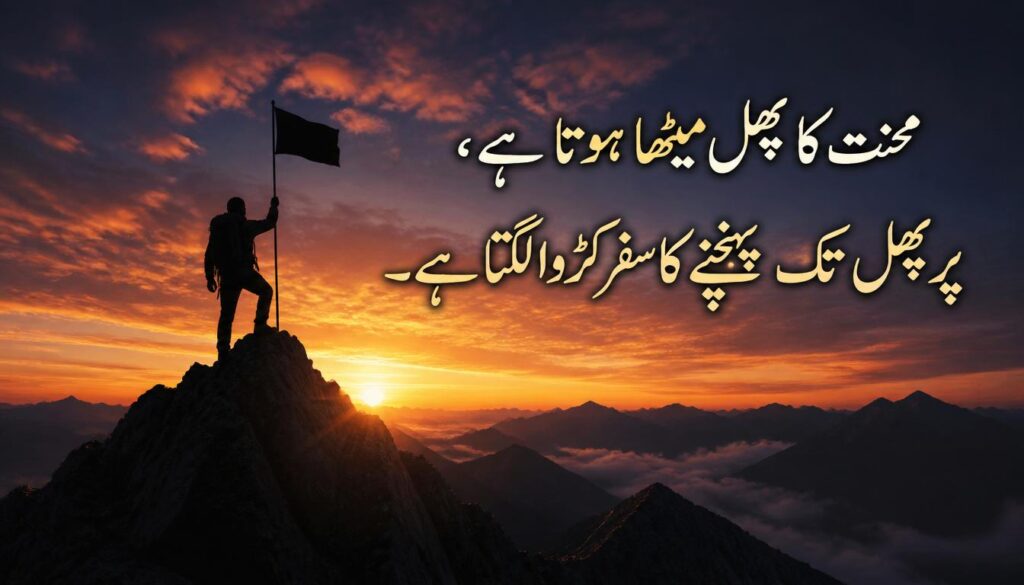
محنت کا پھل میٹھا ہوتا ہے، پر پھل تک پہنچنے کا سفر کڑوا لگتا ہے۔
Mehnat ka phal meetha hota hai, Par phal tak pahunchne ka safar karwa lagta hai.
جو محنت کرتا ہے وہ کبھی ہارتا نہیں، ہار صرف اس کی ہوتی ہے جو کوشش چھوڑ دے۔
Jo mehnat karta hai woh kabhi haarta nahi, Haar sirf us ki hoti hai jo koshish chhor de.
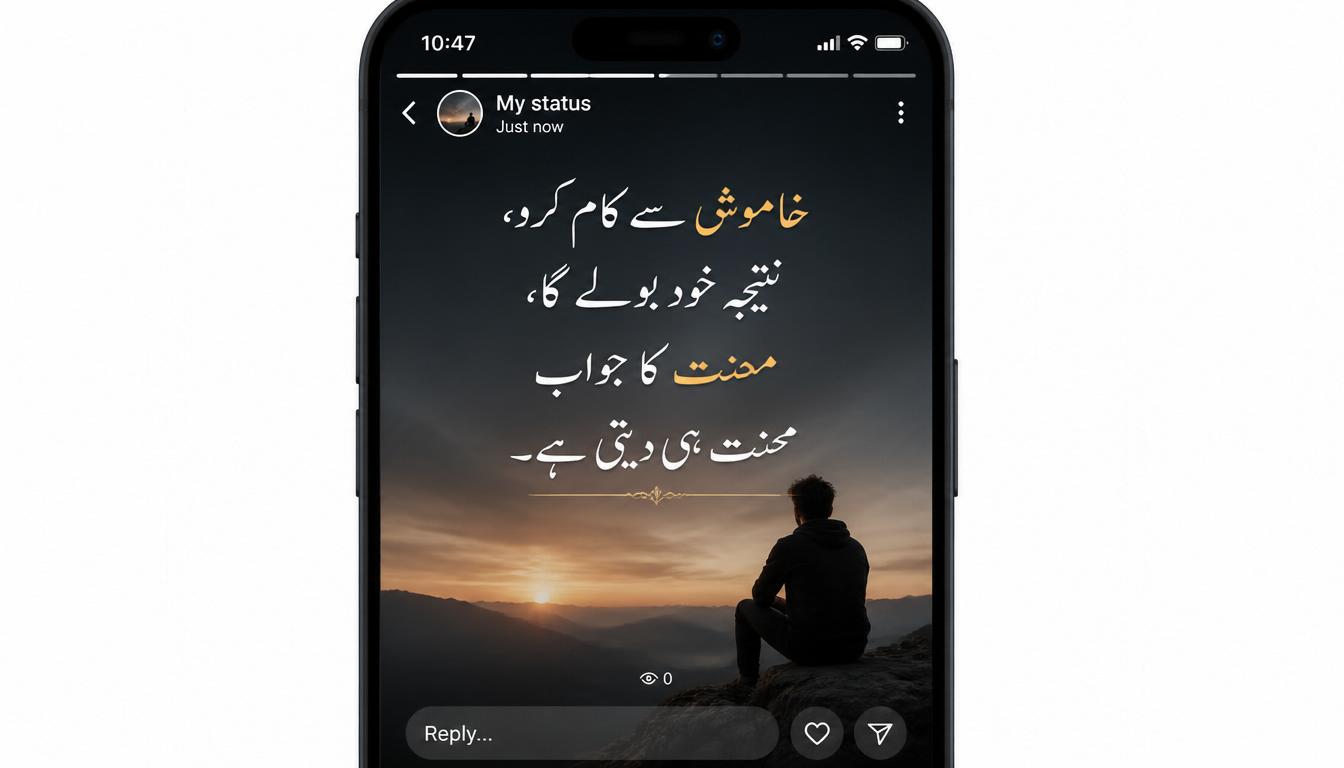
خاموشی سے کام کرو، نتیجہ خود بولے گا، محنت کا جواب محنت ہی دیتی ہے۔
Khamoshi se kaam karo, nateeja khud bolega, Mehnat ka jawaab mehnat hi deti hai.
کامیابی کا کوئی شارٹ کٹ نہیں، صرف محنت، صبر، اور وقت کا انتظار۔
Kamyabi ka koi shortcut nahi, Sirf mehnat, sabr, aur waqt ka intezaar.
Why Mehnat Shayari Resonates with Pakistani and Indian Audiences
Mehnat shayari holds a different weight in South Asian culture than generic “hard work” quotes do in English. The word mehnat itself carries the texture of daily struggle — the rickshaw driver working through monsoon rain, the student studying by candlelight during loadshedding, the small business owner opening shop before sunrise.
When Urdu poetry talks about effort, it is not abstract motivation borrowed from a corporate seminar. It is rooted in real, lived hardship that readers across Pakistan and India instantly recognize. This is why mehnat shayari 2 lines consistently outperforms generic success quotes on WhatsApp status — readers are not just inspired, they feel seen.
The shayari validates the grind before it celebrates the result, which is exactly what makes it trustworthy rather than preachy.
How to Use Mehnat Shayari in Daily Life and Status Updates
The most effective way to use hard work shayari Urdu is contextually, not randomly. Post a mehnat shayari on a Monday morning before a demanding work week, or share it privately with a friend who is exhausted but refuses to quit. Many readers also write these lines in personal journals or sticky notes near their study desk as a daily anchor.
Because mehnat shayari speaks to process rather than outcome, it remains relevant even during long stretches without visible results — which is precisely when motivation is needed most. Pairing a mehnat shayari with a specific personal goal (an exam, a business launch, a fitness target) gives it even more power, transforming a beautiful verse into a personal contract with yourself.
Two Line on Himmat Shayari (Courage)
Himmat shayari speaks directly to the moment of decision — the choice to keep standing after every reason to sit down.

ہمت والے کبھی اکیلے نہیں ہوتے، ان کا حوصلہ ہی ان کا سب سے بڑا ساتھی ہے۔
Himmat wale kabhi akele nahi hote, Unka hausla hi unka sab se bada saathi hai.
ڈرو مت گرنے سے، گرنا سیکھنا ہے، جو کبھی نہیں گرا، اس نے چلنا نہیں سیکھا۔
Daro mat girne se, girna seekhna hai, Jo kabhi nahi gira, us ne chalna nahi seekha.
ہمت سے اٹھو، دنیا راستہ دیتی ہے، جھکے ہوئے کو دنیا اور جھکاتی ہے۔
Himmat se utho, duniya raasta deti hai, Jhuke hue ko duniya aur jhukaati hai.
The Role of Himmat in Urdu Poetic Tradition
Himmat shayari descends from a long classical lineage — most visibly from Allama Iqbal’s philosophy of khudi (self-realization and inner strength), which taught that courage is not the absence of fear but the refusal to let fear make decisions for you. Unlike Western motivational language that often centers positivity, Hausla shayari in Urdu accepts darkness as a given and focuses entirely on the decision to move through it anyway.
This distinction matters for readers: a verse that says “ڈرو مت گرنے سے” (do not fear falling) does not promise an easy path — it reframes falling itself as part of learning to walk. That honesty is why himmat shayari has remained culturally resonant for generations rather than feeling like a passing trend.
When to Share Himmat Shayari for Maximum Impact
Himmat shayari works best in moments of visible struggle — after a setback, before a difficult conversation, or during a season where effort has not yet produced results. Many readers share these verses directly with friends going through job loss, failed exams, or business setbacks, because himmat shayari does not minimize the difficulty — it simply insists that standing back up is still possible.
On Instagram and WhatsApp, himmat shayari performs particularly well as a caption for comeback stories: a reopened business, a second attempt at an exam, a return to the gym after an injury. The verse becomes a quiet narrator for a story that the image alone cannot fully tell.
Two Line Motivational Shayari on Kamyabi (Success)
Kamyabi shayari is reserved for the specific moment when struggle finally meets its reward — and for the patience required to get there.
کامیابی اچانک نہیں آتی، یہ سالوں کی خاموش محنت کا نام ہے۔
Kamyabi achanak nahi aati, Yeh saalon ki khamosh mehnat ka naam hai.
کامیاب وہ نہیں جو کبھی نہ گرے، کامیاب وہ ہے جو گر کر بھی اٹھے۔
Kamyaab woh nahi jo kabhi na gire, Kamyaab woh hai jo gir kar bhi uthe.
جب منزل پر نظر ہو تو راستہ کٹ جاتا ہے، بس ارادہ پختہ رکھو، وقت بدل جائے گا۔
Jab manzil par nazar ho to raasta kat jaata hai, Bas iraada pukhta rakho, waqt badal jaayega.
What Makes Kamyabi Shayari Different from Mehnat Shayari
While mehnat shayari focuses on the process of effort, kamyabi shayari focuses on the meaning of the destination once it is reached.
This distinction is important for content strategy and for readers searching with different intents — someone mid-struggle searches for mehnat shayari to keep going, while someone who just achieved a goal (a result, a promotion, an accepted university offer) searches for success shayari in Urdu to mark the moment. Kamyabi shayari in the Urdu tradition rarely celebrates success in isolation; it almost always references the invisible labor behind it, as seen in lines like “یہ سالوں کی خاموش محنت کا نام ہے” (it is the name of years of silent effort).
This makes kamyabi shayari uniquely suited for graduation posts, business milestones, and exam result announcements, where readers want to honor the win without erasing the struggle that earned it.
Using Kamyabi Shayari for Milestone Moments and Celebrations
Kamyabi shayari is most powerful when paired with a specific, named achievement rather than used generically. A line like “کامیاب وہ ہے جو گر کر بھی اٹھے” (the successful one is the one who rises even after falling) becomes far more meaningful as a caption beneath a photo of an actual comeback — a re-taken exam, a rebuilt business, a recovered relationship with a goal.
Many entrepreneurs and students in the RankQubeo and CME community use kamyabi shayari specifically to mark public milestones on LinkedIn and Instagram, because it communicates achievement without sounding boastful — the humility embedded in Urdu poetic tradition naturally balances celebration with gratitude, which performs far better with South Asian audiences than direct self-promotion.
If you are posting a success milestone, pair your kamyabi shayari with verses from our two line shayari for Instagram captions collection for a caption that is fully optimized for the platform.
Two Line on Mushkil Waqt (Hard Times)
Mushkil waqt shayari exists for the seasons when nothing is going right — and the only available choice is whether to keep walking.
مشکل وقت کا شکریہ ادا کرو، یہی وہ لمحات ہیں جو تمہیں تراشتے ہیں۔
Mushkil waqt ka shukriya ada karo, Yahi woh lamhaat hain jo tumhein tarashhte hain.
مشکلیں آئیں تو سمجھو مضبوط ہو رہے ہو، طوفان آتا ہے تو سمندر گہرا ہوتا ہے۔
Mushkilein aayen to samjho mazboot ho rahe ho, Toofaan aata hai to samandar gehra hota hai.
ہر ناکامی کامیابی کا پہلا سبق ہے، جو سبق سیکھ لے، وہی آگے بڑھتا ہے۔
Har nakaami kamyabi ka pehla sabaq hai, Jo sabaq seekh le, wohi aage badhta hai.
Why Urdu Poetry Frames Hardship as a Teacher
A defining feature of mushkil waqt shayari is that it rarely asks the reader to simply endure pain — it reframes pain as instruction. The line “ہر ناکامی کامیابی کا پہلا سبق ہے” (every failure is the first lesson of success) reflects a broader philosophical current in Urdu poetry, inherited from Sufi and classical traditions, where suffering is understood as formative rather than purely destructive.
This is meaningfully different from Western “stay positive” messaging — struggle shayari in Urdu does not ask readers to deny the difficulty of mushkil waqt, it asks them to extract meaning from it. For readers going through genuinely hard seasons — job loss, family conflict, financial pressure — this distinction matters enormously, because it does not feel dismissive of real pain the way generic positivity often does.
Practical Ways to Use Mushkil Waqt Shayari During Difficult Seasons
Readers commonly use mushkil waqt shayari in two specific ways: as a private anchor during an active hard season, and as a retrospective caption once the hard season has passed. Saving a verse like “طوفان آتا ہے تو سمندر گہرا ہوتا ہے” (the storm comes, and the ocean grows deeper) to revisit daily during a difficult month gives structure to an otherwise formless struggle.
Once the season passes, the same verse becomes a powerful before-and-after caption, paired with a photo or story marking the change. For content creators and students managing exam stress, business setbacks, or personal loss, mushkil waqt shayari offers language for hardship that does not require explaining the full story — the two lines say enough on their own. For verses that go even deeper into emotional pain, our two line sad shayari collection covers grief and heartbreak beyond the context of struggle and ambition.
Best Two Line Motivational Shayari for Students
Student motivational shayari speaks to a very specific kind of struggle — the long, often invisible effort of studying toward a future that has not arrived yet.
طالب علم ہو تو محنت کو عبادت سمجھو، علم وہ دولت ہے جو کوئی چھین نہیں سکتا۔
Taalib-e-ilm ho to mehnat ko ibadat samjho, Ilm woh daulat hai jo koi cheen nahi sakta.
پڑھنا مشکل لگے تو یاد کرو کیوں شروع کیا، وہی جذبہ آج بھی اندر ہے، بس جگانا ہے۔
Parhna mushkil lage to yaad karo kyun shuru kiya, Wohi jazba aaj bhi andar hai, bas jagaana hai.
Why Student Motivational Shayari Performs Exceptionally Well in 2025
Student motivational shayari has become one of the fastest-growing search categories on this site, driven largely by exam season spikes and the academic pressure facing students across Pakistan and India in 2025. Unlike general kamyabi shayari, shayari for students specifically references ilm (knowledge) as something sacred rather than merely useful — the line “علم وہ دولت ہے جو کوئی چھین نہیں سکتا” (knowledge is wealth that no one can steal) draws directly from a cultural and religious reverence for learning that resonates deeply with South Asian families.
Students searching WhatsApp and Instagram for motivation before board exams, university entrance tests, or competitive exams consistently gravitate toward shayari that frames mehnat as ibadat (worship) — elevating daily study from a chore into something meaningful.
How Students Use This Shayari Throughout Exam Season
Students typically engage with student motivational shayari in three specific moments: the night before a major exam, during a study slump mid-semester, and immediately after receiving disappointing results.
For each of these moments, different verses serve different emotional needs — pre-exam shayari should feel grounding and confident, mid-slump shayari should reconnect students to their original motivation (as in “یاد کرو کیوں شروع کیا” — remember why you started), and post-result shayari should reframe failure as instructive rather than final.
Teachers, tuition centers, and student WhatsApp groups across Pakistan and India regularly circulate these exact verses during exam seasons, making this category one of the most consistently searched throughout the academic calendar.
FAQ SECTION
Q: What is the best two line motivational shayari for WhatsApp status?
A: The best motivational shayari for WhatsApp status is verses about silent hard work and the certainty that effort is never wasted. Lines like “Khamoshi se kaam karo, nateeja khud bolega” (Work silently, the result will speak) consistently get the most saves and shares among students and young professionals.
Q: Which Urdu poet is best known for motivational shayari?
A: Allama Iqbal is the undisputed master of motivational Urdu poetry — his verses about self-belief, ambition, and the eagle’s flight have inspired generations. His shayari about khudi (self-awareness and self-realization) is particularly powerful for success and confidence. Ahmad Faraz and Waseem Barelvi also have widely shared motivational verses.
Q: What is the difference between motivational shayari and attitude shayari?
A: Motivational shayari focuses on inspiring action — it encourages hard work, patience, courage, and persistence. Attitude shayari is more about self-expression and confidence — it announces who you are, not where you are going. Both are popular as WhatsApp status and Instagram captions, but for different moods and audiences.
Q: Is Urdu two line shayari in Urdu good for students?
A: Urdu motivational shayari is excellent for students because it combines emotional depth with a message of perseverance. Lines about mehnat (hard work), ilm (knowledge), and manzil (the goal) speak directly to student life. Many students in Pakistan, India, and diaspora communities use Urdu motivational shayari as daily affirmations.
Q: How do I write motivational shayari in Urdu?
A: Start with a truth about effort or struggle — something you have actually experienced. Express it in the first line. The second line should either be the payoff (what effort leads to) or the challenge (the obstacle that must be faced). Keep the language real and grounded. The best motivational shayari does not preach — it stands alongside you.
End CTA:
You have already done the hardest part — you showed up. Keep going. Explore our full collection of two line shayari in Urdu for more verses across every mood, and if you want to channel today’s energy into something creative, read our guide on how to write your own two line shayari.
Related posts:
Two Line Shayari
Two Line Friendship Shayari
Two Line Shayari in Urdu
Two Line Love Shayari in Urdu
Two-Line Sad Shayari in Urdu
Two-Line Attitude Shayari