
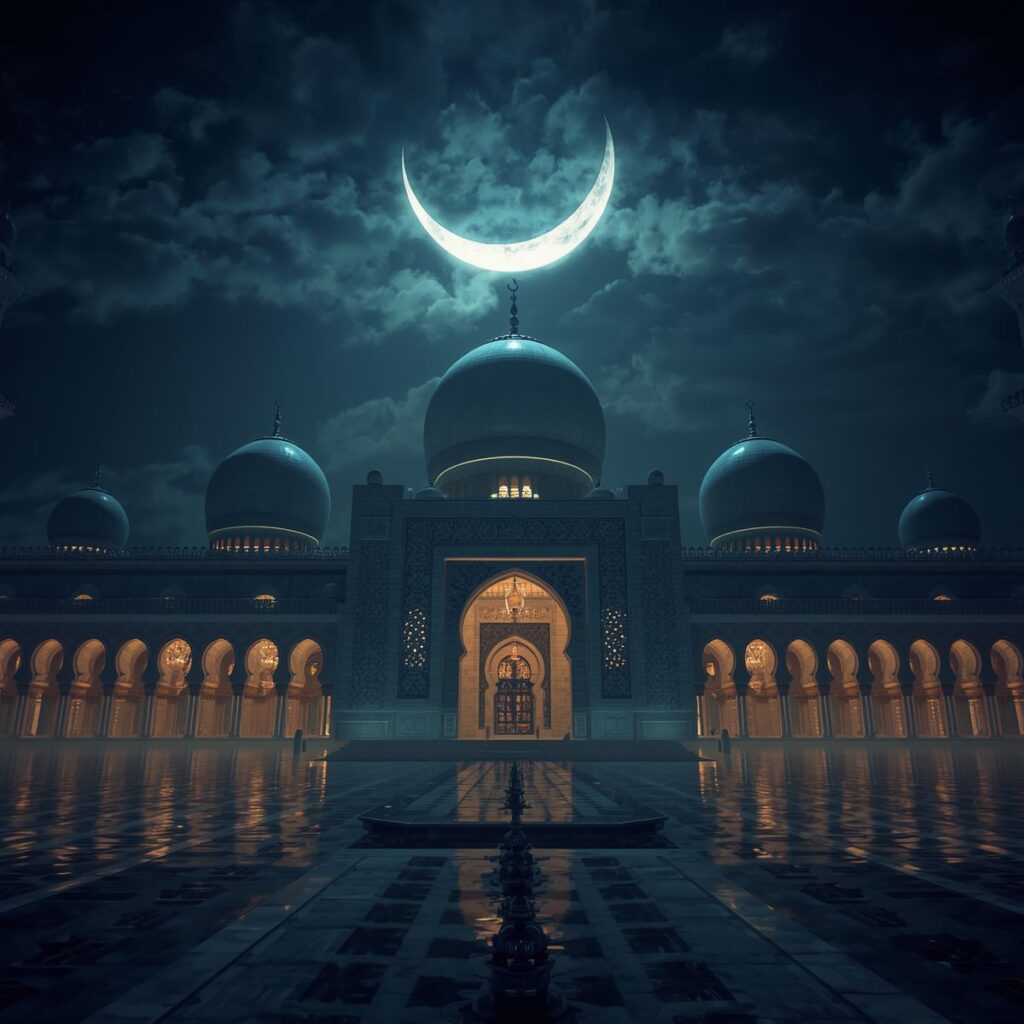
What Is Muharram in Islam? A Deep Introduction {#intro}
What Is Muharram in Islam?
Muharram is the first and most sacred month of the Islamic lunar calendar — a month that Allah Himself has honored above most others. The word Muharram means “forbidden” in Arabic, reflecting the deep reverence and divine protection placed on this blessed time. Prophet Muhammad ﷺ called it the “Month of Allah” — the only month given this extraordinary title in an authentic hadith recorded by Imam Muslim, one of Islam’s most trusted hadith scholars.
According to the Pew Research Center, approximately 1.8 billion Muslims worldwide observe this month through fasting, prayer, and sincere reflection. It carries the memory of two great events — the miraculous salvation of Prophet Musa (AS) and the heartbreaking tragedy of Karbala. Whether you are deepening your faith or exploring Islamic history for the first time, this guide will give you a clear, respectful, and complete understanding of Muharram and why it truly matters.
🕌 Why Is Muharram Sacred? The Islamic Significance {#significance}
What Does the Quran Say About Sacred Months?
Allah says in the Quran (Surah At-Tawbah, 9:36): “Indeed, the number of months with Allah is twelve lunar months in the register of Allah from the day He created the heavens and the earth; of these, four are sacred.”
The four sacred months in Islam are Dhul Qa’dah, Dhul Hijjah, Muharram, and Rajab. Among these, Muharram holds a special place. The Prophet Muhammad ﷺ called it the “Month of Allah” — the only month linked directly to Allah’s name in a hadith.
Why Is Muharram Called the Month of Allah?
The Prophet Muhammad ﷺ said: “The best fasting after Ramadan is in the month of Allah, Muharram.” (Muslim, 1163)
This hadith, recorded by Imam Muslim — one of the most trusted scholars of hadith — shows the enormous spiritual reward in observing Muharram. Scholars such as Ibn Rajab al-Hanbali and Ibn al-Qayyim wrote extensively about the virtues and spiritual depth of this sacred month.
Muharram is a time when good deeds are multiplied. Sins committed in this month are also considered more serious. This makes it a month of extra caution, humility, and worship.
📜 The True History of Muharram and the Islamic Calendar {#history}
How Did the Islamic Calendar Begin?
The Islamic calendar — called the Hijri calendar — began in 622 CE. It marks the year Prophet Muhammad ﷺ migrated from Mecca to Medina, an event known as the Hijra. The second Caliph, Umar ibn al-Khattab (RA), officially established this calendar system.
The Hijri calendar is a lunar calendar, meaning each month begins with the sighting of the new crescent moon. Muharram is always the first month of this Islamic year. It typically lasts 29 or 30 days.
What Is the Islamic New Year?
The first day of Muharram marks the Islamic New Year, also known as Hijri New Year or Ras al-Sana al-Hijriya. Unlike Western New Year celebrations, the Islamic New Year is observed quietly — with reflection, prayer, and remembrance of Allah’s blessings.
Muslims use this time to review their past year, seek forgiveness, and set intentions for spiritual growth. The focus is completely inward and spiritual.
How Many Muslims Observe Muharram Worldwide?
According to the Pew Research Center, there are approximately 1.8 billion Muslims in the world. The month’s significance is universally recognized across all schools of Islamic thought — Sunni, Shia, Sufi, and beyond.
⚔️ The Battle of Karbala: What Really Happened? {#karbala}
Who Was Imam Hussain (AS)?
Imam Hussain ibn Ali (AS) was the grandson of Prophet Muhammad ﷺ, the son of Imam Ali (AS) and Fatimah al-Zahra (SA). He was deeply loved by the Prophet, who said: “Hussain is from me and I am from Hussain.” (Tirmidhi)
Imam Hussain was not just a family member of the Prophet. He was a symbol of truth, justice, and courage. His life and death changed the course of Islamic history forever.
What Happened at Karbala?
On the 10th of Muharram, 61 AH (October 10, 680 CE), a heartbreaking event took place on the plains of Karbala, in present-day Iraq.
Imam Hussain (AS) refused to pledge allegiance to Yazid ibn Muawiyah, the ruler of the time, because Yazid was unjust and oppressive. Imam Hussain stood for truth, even when it meant facing death. He traveled toward Kufa with his family and 72 companions.
The army of Yazid — numbering in the thousands — surrounded them. On the day of Ashura, Imam Hussain, his male companions, and even some family members were killed. His camp was burned. The women and children were taken as prisoners to Damascus.
This tragedy is one of the most painful events in all of Islamic history. It taught Muslims a timeless lesson: stand for justice, even at the greatest cost.
🌙 What Is Ashura? The Heart of Muharram {#ashura}
What Does Ashura Mean?
Ashura comes from the Arabic word ashar, meaning “ten.” It refers to the 10th day of Muharram — one of the most significant days in the entire Islamic calendar.
Ashura carries two major historical meanings:
- For Sunni Muslims: The day Allah saved Prophet Musa (Moses) and Bani Israel from Pharaoh by parting the Red Sea. Prophet Muhammad ﷺ began fasting on this day when he learned that Jews also fasted to honor this miracle..
- For Shia Muslims: The day Imam Hussain (AS) was martyred in Karbala. It is a day of deep mourning, lamentation, and remembrance.
Why Do Muslims Fast on Ashura?
The Prophet Muhammad ﷺ said: “Fasting the day of Ashura, I hope Allah will expiate thereby the sins of the year before it.” (Muslim, 1162)
This is a confirmed Sunnah of the Prophet. Muslims who fast on the 9th and 10th of Muharram together follow the Prophet’s example perfectly. The great scholar Ibn Abbas (RA) narrated that the Prophet encouraged fasting on the 9th as well, to distinguish Muslim practice from the Jewish tradition.
☪️ Muharram in Sunni Islam: Fasting, Prayer, and Reflection {#sunni}
How Do Sunni Muslims Observe Muharram?
For Sunni Muslims, Muharram is primarily a time of worship, fasting, and gratitude. The most important practice is fasting on Ashura (10th of Muharram) — and ideally also on the 9th or 11th.
Key Sunni practices during Muharram include:
- Fasting on the 9th and 10th of Muharram
- Increasing voluntary prayers and dhikr (remembrance of Allah)
- Seeking forgiveness for past sins
- Reciting the Quran and reflecting on its meanings
- Giving sadaqah (charity) to the poor and needy
- Reflecting on the Hijra and the courage of the early Muslims
What Is the Spiritual Reward of Muharram Fasting?
According to Imam Nawawi — one of the greatest scholars of Shafi’i jurisprudence — fasting on Ashura is one of the most rewarding voluntary fasts in the entire year, second only to Ramadan. The expiation of one full year’s sins through a single fast is a mercy that only Allah can grant.
“There is no month that begins more hopefully for the believer than Muharram — it is a reset, a renewal, and a return to Allah.” — Paraphrase of Ibn Rajab al-Hanbali’s reflections in Lata’if al-Ma’arif
🌹 Muharram in Shia Islam: Mourning and Remembrance {#shia}
How Do Shia Muslims Observe Muharram?
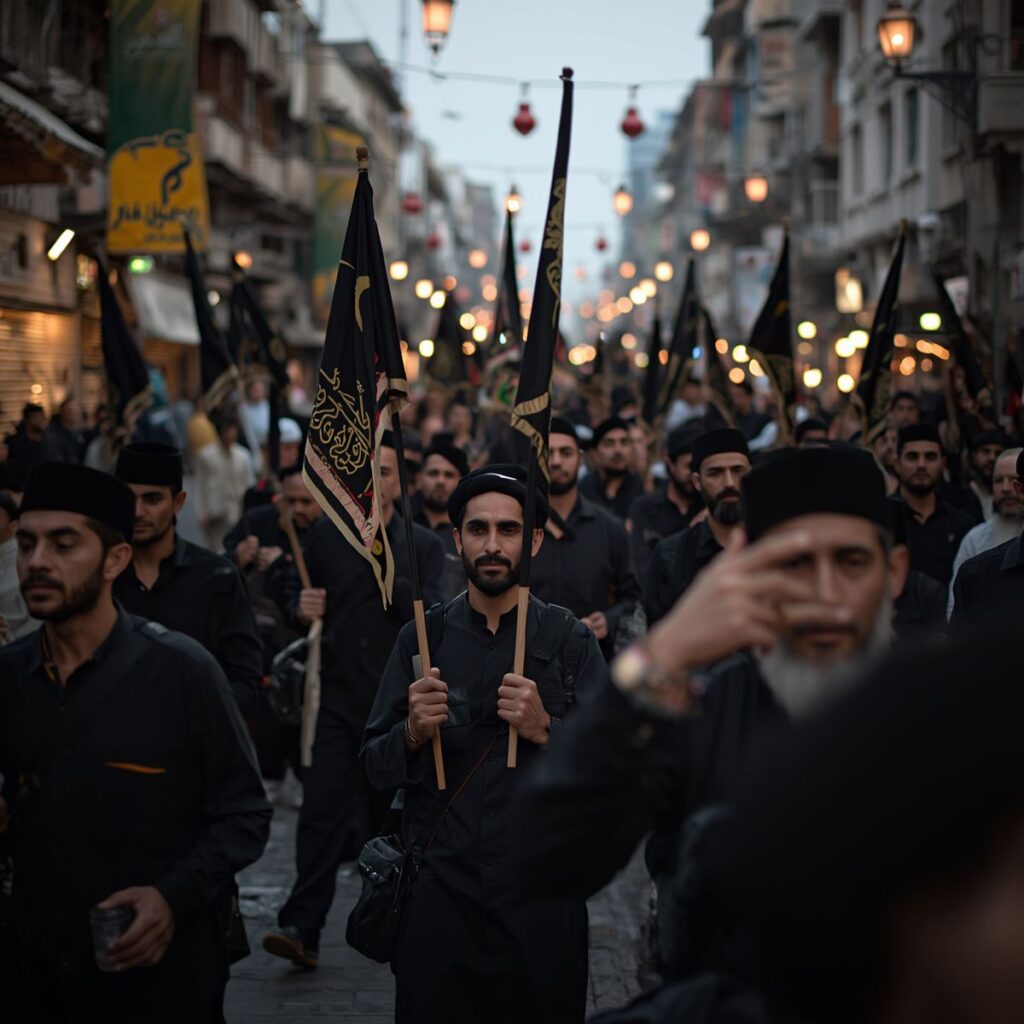
For Shia Muslims, Muharram — especially the first 10 days — is the most sacred and sorrowful period of the Islamic year. It is dedicated entirely to mourning and remembering the martyrdom of Imam Hussain (AS) and his companions at Karbala.
Shia observances during Muharram include:
- Majalis (mourning gatherings): Religious gatherings where scholars narrate the events of Karbala and lead communal weeping
- Lamentation poetry (Marsiya and Noha): Elegies recited in remembrance of Imam Hussain
- Processions: Large mourning marches on Ashura in countries like Iran, Iraq, Pakistan, Lebanon, and India
- Black clothing: Worn as a sign of grief and mourning
- Visiting the shrine of Imam Hussain in Karbala, Iraq, one of the largest annual pilgrimages in the world
Why Does Muharram Matter So Deeply to Shia Muslims?
The tragedy of Karbala is not just a historical event for Shia Muslims — it is a living, breathing reality that shapes their identity, theology, and worldview. Imam Hussain’s sacrifice represents the ultimate stand against injustice and oppression.
According to Professor Seyyed Hossein Nasr, a world-renowned Islamic scholar, “The event of Karbala is the central spiritual and moral axis around which Shia life revolves.”
📊 Sunni vs. Shia Muharram Practices: A Comparison Table {#comparison}
| Practice | Sunni Islam | Shia Islam |
| Primary Focus | Fasting and worship | Mourning and remembrance |
| Ashura Meaning | Salvation of Prophet Musa | Martyrdom of Imam Hussain |
| Fasting on Ashura | Strongly recommended Sunnah | Less emphasized |
| Mourning Gatherings | Not common | Central practice (Majalis) |
| Processions | Rare | Widespread globally |
| Dress Code | No specific code | Black clothing worn |
| Duration of Observance | The entire month, especially 9th–10th | First 10 days are especially intense |
| Charitable Giving | Encouraged throughout the month | Food distribution (Tabarruk) common |
🤲 How Should a Muslim Observe Muharram? Step-by-Step Guide {#howto}
Here is a clear, practical guide for observing Muharram with full sincerity and spiritual depth:
Step 1: Set Your Intention (Niyyah). Begin Muharram by making a sincere intention to draw closer to Allah. Intentions matter deeply in Islam — they transform ordinary actions into acts of worship.
Step 2: Fast on the 9th and 10th of Muharram. Follow the blessed Sunnah of Prophet Muhammad ﷺ. Plan your fast. The 9th is recommended to distinguish Muslim fasting from others.
Step 3: Increase Your Dhikr and Quran Recitation. Spend extra time each day reciting SubhanAllah, Alhamdulillah, Allahu Akbar, La ilaha illallah. Read at least one page of the Quran daily during Muharram.
Step 4: Seek Forgiveness and Make Tawbah. Muharram is an ideal time for sincere repentance. Sit in quiet reflection each night. Ask Allah to forgive your sins and guide your heart.
Step 5: Give Charity Generously. The Prophet ﷺ encouraged extra charity during sacred months. Feed a neighbor, give to a local masjid, or donate to a relief organization.
Step 6: Learn About Islamic History. Read about the Hijra, about Musa (AS) and Pharaoh, and about the events of Karbala. Knowledge deepens your connection to this sacred month.
Step 7: Keep Family and Community Ties Strong. Visit family, reconcile broken relationships, and attend your local masjid’s Muharram programs. Community connection is a core Islamic value.
Step 8: Reflect and Set Goals for the New Islamic Year. Write down your spiritual goals for the year. Ask yourself: How can I become a better Muslim? How can I serve my community more deeply?
❓ People Also Ask: Common Questions About Muharram {#paa}
Is Muharram a festival or a mourning period?
Muharram is neither a festival nor purely a mourning period in a universal sense. For Sunni Muslims, it is primarily a sacred month of worship and fasting — a time of spiritual reflection and gratitude. For Shia Muslims, especially during the first 10 days, it is a profound period of mourning and remembrance for the martyrdom of Imam Hussain (AS). Both approaches come from deep love for Islam and its history.
Why do Muslims mourn in Muharram?
Shia Muslims mourn in Muharram to honor the sacrifice of Imam Hussain (AS) and his companions who were killed at Karbala on the 10th of Muharram, 61 AH. This mourning is an act of love, solidarity, and protest against oppression. It is also a spiritual practice that connects believers to the highest values of justice and sacrifice in Islam.
What is forbidden during Muharram?
As one of the four sacred months, war and fighting were traditionally forbidden during Muharram in early Islam. More broadly, all major sins — backbiting, lying, injustice, and breaking family ties — are considered especially serious during this blessed month. Muslims are encouraged to increase good deeds and avoid all harmful actions.
Can Muslims celebrate the Islamic New Year on Muharram 1?
Yes, Muslims can acknowledge the Islamic New Year on the 1st of Muharram with quiet gratitude and reflection. However, loud parties, music, and extravagant celebrations are not part of Islamic tradition. The Islamic approach to the new year is spiritual — asking Allah for blessings, making intentions, and seeking His guidance.
What is the significance of the 10th of Muharram (Ashura)?
The 10th of Muharram — Ashura — is one of the most significant days in Islam. It marks the day Allah saved Prophet Musa and the Children of Israel from Pharaoh. It is also the day Imam Hussain (AS) was martyred at Karbala. Sunni Muslims fast on this day to follow the Prophet’s Sunnah. Shia Muslims observe it as a day of deep mourning.
Is fasting on Ashura obligatory?
No, fasting on Ashura is not obligatory (fard) in Islam. It is a highly recommended voluntary fast (Sunnah mustahabb). However, its spiritual reward is immense — the Prophet ﷺ said it expiates the sins of the previous year. Muslims who miss it are not sinful, but those who observe it gain great blessings.
✅ Conclusion {#conclusion}
What is Muharram in Islam? It is the sacred first month of the Islamic year — a month of divine honor, deep history, and true spiritual awakening. It carries the memory of Prophet Musa’s miraculous rescue, the heartbreaking sacrifice of Imam Hussain at Karbala, and the beautiful Sunnah of fasting and reflection of Prophet Muhammad ﷺ.
Whether you fast, mourn, pray, or simply pause to reflect — Muharram invites every Muslim to return to their real purpose: worship, gratitude, and a commitment to justice.
As the great scholars remind us, this month is a gift from Allah. Use it wisely. Fill your heart with remembrance. Let Ashura be a day that changes you — not just a date on a calendar.
May Allah accept our worship, forgive our sins, and guide our hearts in this sacred month. Ameen.
If this article touched your heart, please share it with your family and friends. Leave a comment below — we would love to know how you observe Muharram! And explore our related articles to deepen your Islamic knowledge even further.
Related posts: