Introduction:
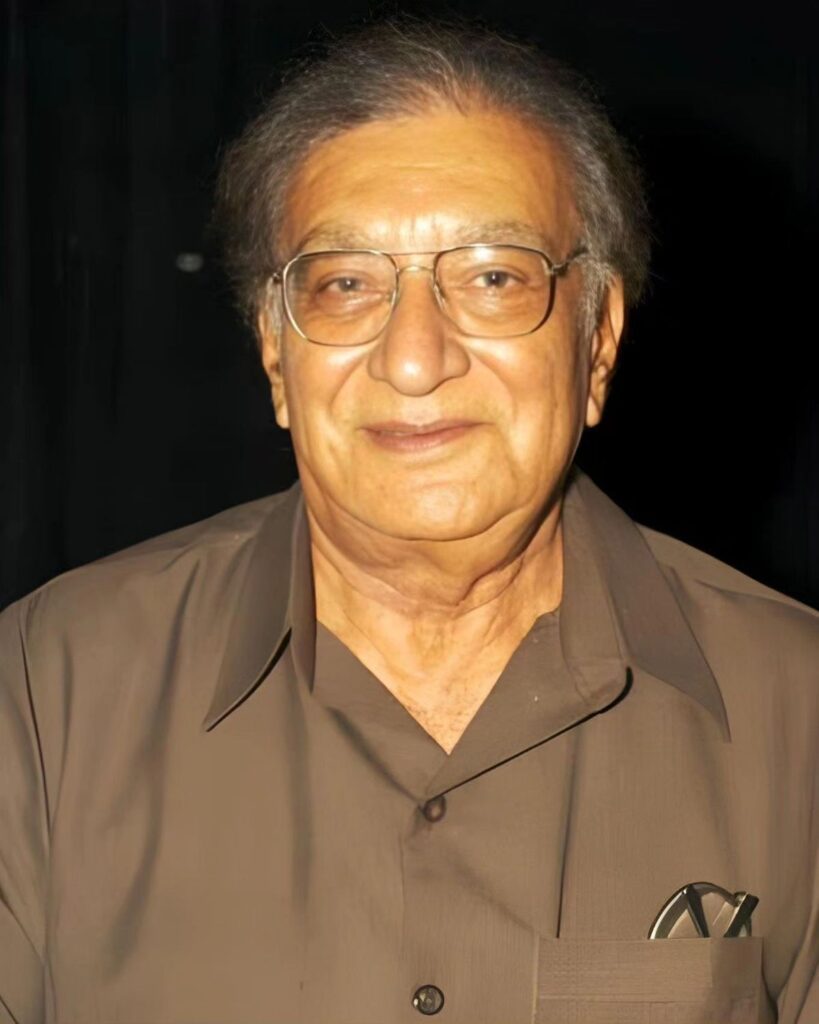
Ahmad Faraz was one of the most celebrated and influential Urdu poets of the 20th century, and his verses continue to resonate deeply across generations. Born Syed Ahmad Shah in Nowshera, in what was then British India’s North-West Frontier Province, in January 1931.
Faraz built an extraordinary body of romantic poetry and resistance literature that challenged authoritarianism while writing about love with genuine elegance, a combination that few poets of his generation managed with the same consistency across a decades-long career. His collections, including Tanha Tanha and Jaan Jaanan, earned him the Sitara-e-Imtiaz and Hilal-e-Imtiaz, two of Pakistan’s highest civil honors.
The Life of a Legend
Faraz adopted the takhalus (pen name) “Faraz,” and studied Urdu and Persian literature at Edwardes College and later the University of Peshawar, earning master’s degrees in both languages. During his college years, poets Faiz Ahmad Faiz and Ali Sardar Jafri became significant influences on his early work.
His Early Career
This sub-section covers how Faraz built his early reputation, since his career didn’t start with the political poetry he later became known for.
He first gained recognition through recitations of his ghazals on Radio Pakistan Peshawar, before moving to Karachi to work as a radio producer. He later returned to Peshawar and eventually became chairman of the Pakistan Academy of Letters, a role that placed him at the center of Pakistan’s literary establishment.
The Dual Identity: Romance and Resistance
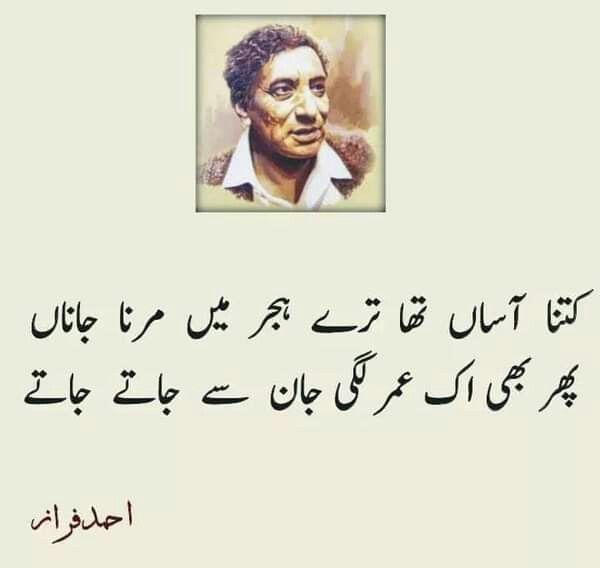
Ahmad Faraz is unusual because he moved comfortably between two very different modes of writing — some of the most widely recited romantic ghazals in modern Urdu literature, and outspoken political criticism that came at a real personal cost.
The Consequences of His Political Writing
Faraz was arrested for writing poems critical of General Zia-ul-Haq’s military government, and following that arrest, he went into self-imposed exile, spending roughly three years in Britain, Canada, and elsewhere in Europe before eventually returning to Pakistan.
Key Literary Works
“Faraz’s major published works span several decades, from early romantic poetry toward more overtly political and reflective writing later in his career.”
| Year | Title | Theme |
| 1958 | Tanha Tanha | His first collection, showcasing early romantic and lyrical talent |
| 1968 | Shab-e-Khoon | Politically charged poems critiquing authoritarianism |
| 1972 | Jaan Jaanan | A mature synthesis of romantic and resistance themes |
| 1981 | Khwab Gul Pareshan Hai | Lyrical exploration of love, loss, and disillusionment |
His Political Poetry
This sub-section highlights his political work specifically, since it’s often cited as representative of a side that gets less attention than his romantic ghazals. “Among his more overtly political works, poems addressing state repression and censorship stand in clear contrast to his romantic writing, underscoring how deliberately he moved between the two registers.”
The “Faraz Style” of Writing
Writing well about Ahmad Faraz requires actually explaining what made his style distinct from his contemporaries, not just listing his poems.
What Defines the Faraz Style
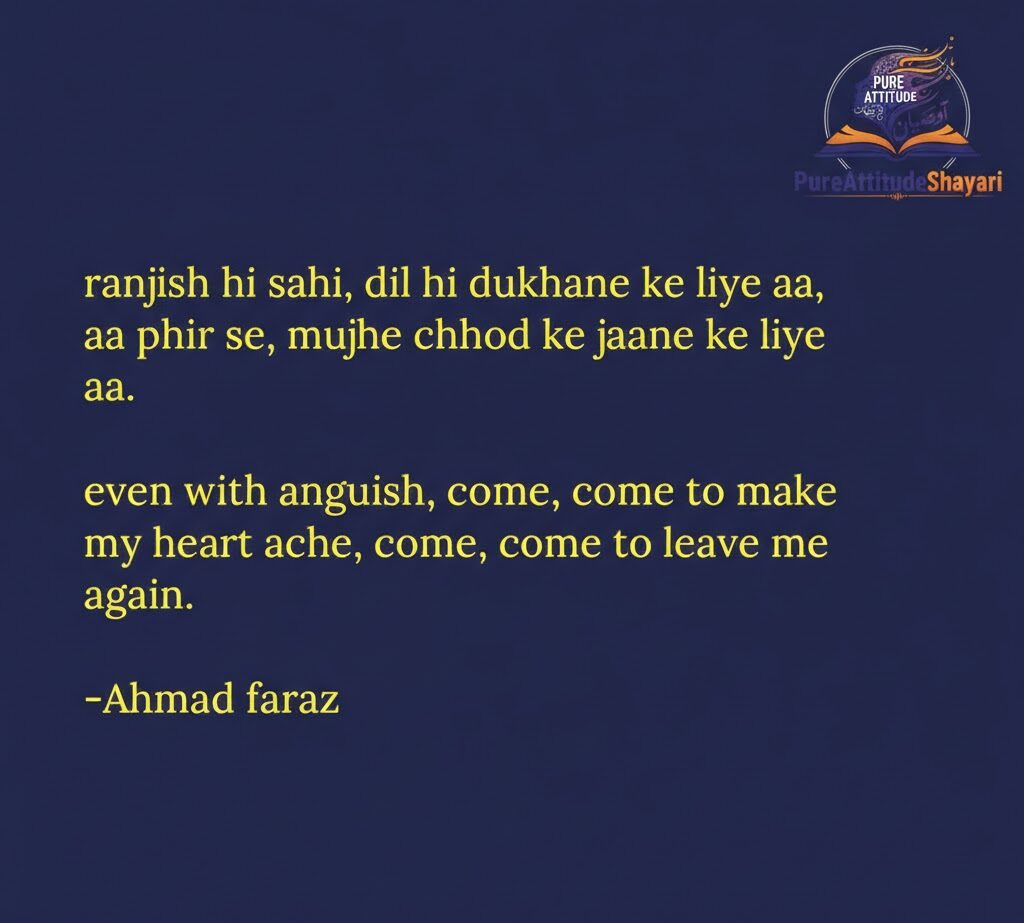
Faraz used everyday, accessible language to express complex emotions, which set him apart from poets who leaned more heavily on ornate Persian vocabulary. He paid close attention to rhythm, so that his couplets read naturally rather than feeling forced into a rhyme scheme. Because his language stayed accessible without sacrificing emotional depth, he earned a reputation as a poet who could be read and understood widely.
How Faraz’s Poetry Reached New Audiences
Faraz’s poetry continues to reach new audiences partly because of how widely his ghazals have been performed by major vocalists over the decades.
The Role of Musical Performance
Singers including Mehdi Hassan, Noor Jehan, Ghulam Ali, Jagjit Singh, and Runa Laila performed his ghazals in films and live concerts, which introduced his work to audiences who might never have encountered it in print.
Faraz’s Role at the Pakistan Academy of Letters
Beyond his poetry, Faraz played a significant institutional role, serving as founding director general and later chairman of the Pakistan Academy of Letters.
Why This Role Mattered
The Pakistan Academy of Letters functions as a national body supporting literary work across Pakistan, and Faraz’s leadership there placed him in a position to shape literary policy, not just produce his own poetry. He later also served as chairman of the National Book Foundation in Islamabad.
The Near-Death Scare of 2008
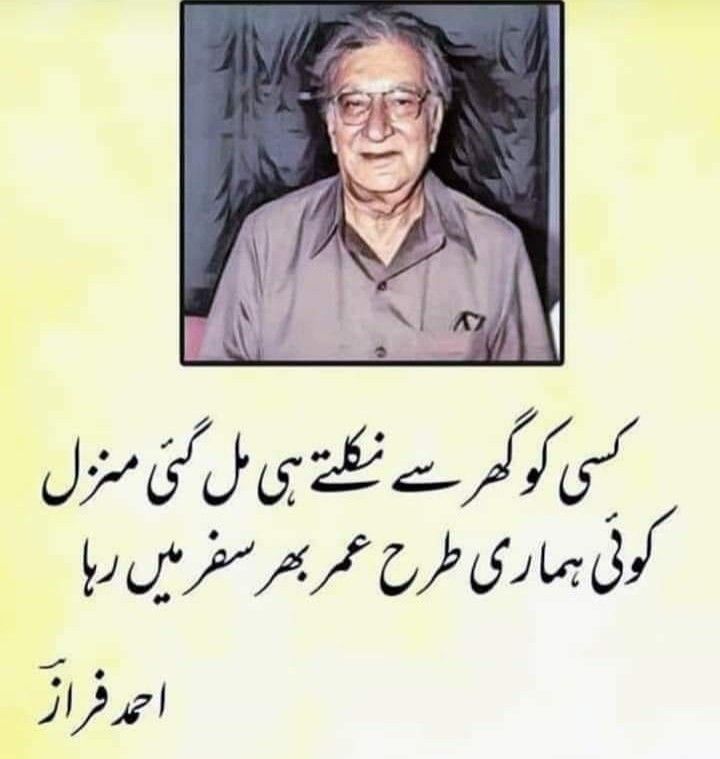
Earlier in 2008, before his actual death that August, reports circulated that Faraz had died while receiving treatment in a Chicago hospital following a fall in Baltimore, Maryland.
What Actually Happened
Those early reports turned out to be premature — Faraz recovered enough to return to Pakistan, where he passed away several months later, on August 25, 2008, from kidney failure, confirmed publicly by his son Shibli Faraz.
Faraz’s Family and Political Legacy
Faraz’s family has continued to play a role in Pakistani public life well after his death.
The Family Connection
His son, Shibli Faraz, has held senior political positions in Pakistan, and his brother, Masood Kausar, served as Governor of Khyber Pakhtunkhwa.
How Faraz Is Remembered Compared to His Contemporaries
Faraz is often discussed alongside other major 20th-century Urdu poets like Faiz Ahmad Faiz, since both combined political conviction with lyrical romantic writing, though their styles remained distinct.
The Key Distinction
Where Faiz’s political poetry often leaned toward dense metaphor and classical Persian-influenced vocabulary, Faraz generally kept his language more direct and accessible, even when addressing similarly serious political themes.
Faraz’s Early Political Involvement
Before he became known primarily as a poet critical of military dictatorship, Faraz had early exposure to organized political activism through his association with the Khaksar movement in his youth.
An Overlooked Early Influence
The Khaksar movement was a socio-political organization in British India that emphasized discipline, self-reliance, and resistance to colonial rule. Faraz’s early exposure to this kind of organized activism likely shaped the political instincts that later showed up much more explicitly in his poetry.
FAQs
Why did Ahmad Faraz return his government award?
He returned his Hilal-e-Imtiaz award in 2006, roughly two years after receiving it, as a protest against the policies of the Musharraf government.
Is Ahmad Faraz considered a modern or classical poet?
He’s generally treated as a bridge between the two — working within classical ghazal structure while writing about distinctly modern political and social themes.
How did his exile affect his poetry?
During his years in Britain, Canada, and Europe, his work grew more introspective, often dealing with distance, displacement, and longing for home.
Where was Ahmad Faraz actually born?
He was born in Nowshera, in what was then British India’s North-West Frontier Province — not Kohat, a detail that gets repeated incorrectly on several other sites.
Did Ahmad Faraz receive any recognition after his death?
Yes — the Government of Pakistan posthumously awarded him the Hilal-e-Pakistan for his contributions to poetry and Urdu literature.
Did Ahmad Faraz’s family remain involved in public life after his death?
Yes — his son Shibli Faraz has held senior political roles in Pakistan, and his brother Masood Kausar served as Governor of Khyber Pakhtunkhwa.
What other institutional roles did Faraz hold beyond writing poetry?
He served as founding director general and later chairman of the Pakistan Academy of Letters, and later as chairman of the National Book Foundation.
Is Ahmad Faraz often compared to Faiz Ahmad Faiz, and if so, why?
Yes — both combined political resistance with romantic lyricism, but Faraz is generally considered more linguistically accessible.
Was Ahmad Faraz politically active before he conflicted with Zia-ul-Haq’s government?
Yes — he had early exposure to organized activism through the Khaksar movement in his youth.
Final Thoughts
Ahmad Faraz’s work still resonates because he refused to separate romance from politics, treating both as equally worthy of serious poetic attention. Whether read for the ghazals or the resistance poetry, his work rewards readers willing to engage with both sides of what made him distinct, rather than reducing him to only the romantic lines that circulate most widely online today.