Introduction:
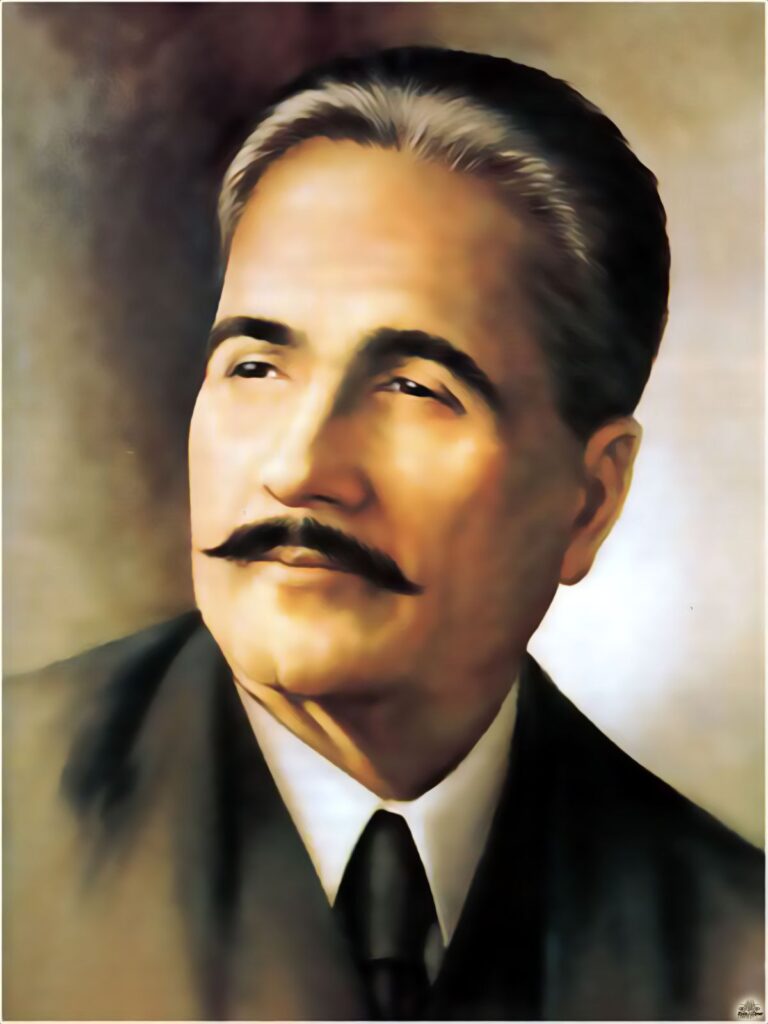
The intellectual landscape of the 20th century featured many towering figures, but few combined spiritual depth with political foresight the way Allama Iqbal did. Often called Shair-e-Mashriq (The Poet of the East), Iqbal was a philosopher, a lawyer, and a visionary whose ideas helped shape a nation.
This article walks through his life, his intellectual development in Europe, his philosophy of Khudi, and why his work still resonates globally today. Whether you’re a student of literature or simply curious about his legacy, his journey offers a genuinely useful lens on self-discovery.
Early Life and Intellectual Evolution
Allama Iqbal was born in Sialkot in 1877, into a household shaped by religious devotion. His early education in Arabic and Persian laid the groundwork for his later poetic work. Later, his time studying at Cambridge and Munich became a turning point in how he thought about the world.
While in Europe, Iqbal engaged closely with the work of philosophers like Nietzsche, Hegel, and Goethe. Rather than feeling overwhelmed by Western materialism the way some of his contemporaries did, he looked for a synthesis between the two traditions instead.
What Iqbal Was Actually Reconciling
This sub-section covers what Iqbal was specifically trying to reconcile — not rejecting the West outright, but questioning which parts of it were worth adopting and which parts risked costing the East its own identity.

Iqbal sought to reconcile the scientific progress associated with the West with what he saw as the spiritual vitality of the East. This period of his life mattered because it planted the seeds of his later political activism, and it’s when he wrote The Reconstruction of Religious Thought in Islam, one of his major philosophical works.
The Philosophy of Khudi: Reclaiming the Self
At the center of Iqbal’s message sits the concept of Khudi, often translated as selfhood or individuality. Writing at a time when colonialism had stripped many people of a sense of dignity, Iqbal argued that the human soul isn’t a drop meant to dissolve into the ocean — it’s closer to a diamond that needs to be polished and strengthened.
What Khudi Actually Meant to Iqbal
This section breaks down what Khudi actually meant to Iqbal, since the term gets used loosely without much explanation in a lot of shorter summaries.
For Iqbal, Khudi involved strengthening the self through desire (having a real purpose), Ishq (a passionate commitment to one’s ideals), and Faqr (a detachment from material greed while still engaging fully with the world). When someone cultivated these qualities, Iqbal believed they became what he called a Mard-e-Momin — a person of genuine conviction, capable of shaping the course of events around them rather than just reacting to them.
This wasn’t purely abstract philosophy. It functioned as something closer to a psychological call to action — Iqbal wanted a demoralized population to stand taller and reclaim a sense of its own direction.
Allama Iqbal as the Architect of Pakistan
While many people know Iqbal primarily as a poet, his political role was genuinely significant. During his 1930 presidential address at Allahabad, he laid out a vision that would eventually influence the creation of Pakistan.

Iqbal argued that Muslims in the subcontinent needed a consolidated territory to protect their cultural and religious identity. He didn’t live to see independence in 1947, but his intellectual framework shaped how Muhammad Ali Jinnah and the broader Pakistan Movement approached the question of statehood. His vision wasn’t built around isolation — he described a state that could contribute to global stability through principles of social justice rooted in Islamic thought.
Key Literary Works
Iqbal’s major works span both Urdu and Persian, and each reflects a different facet of his thinking.
| Work | Language | Core Theme |
| Asrar-e-Khudi | Persian | The secrets of the self and individuality |
| Bang-e-Dara | Urdu | Patriotism and the spiritual awakening of youth |
| Bal-e-Jibril | Urdu | High-altitude philosophical discourse |
| Zarb-e-Kaleem | Urdu | A declaration against modern intellectual complacency |
Why His Poetry Resonates Globally Today
Iqbal’s appeal isn’t limited to South Asia or to readers of Urdu and Persian. Scholars have compared his Persian work Javid Nama to Dante’s Divine Comedy, since both take the reader through a structured, symbolic journey across different spheres of existence.
Why the Critique of Blind Imitation Still Gets Cited
This sub-section covers why Iqbal’s critique of imitation without understanding still gets cited by contemporary writers, decades after he wrote it.

In the 21st century, Iqbal’s warning against “blind imitation” feels more relevant than when he first wrote it. He cautioned against adopting foreign customs without first understanding one’s own cultural roots. To Iqbal, modern life had given people power over nature while costing them power over their own inner lives. His call to return to a spirit of inquiry and reform — what he called Ijtihad — remains a reference point for contemporary reformist thinkers.
The Symbol of the Shaheen (Falcon)
One of the most recognizable images in Iqbal’s poetry is the Shaheen, or falcon. He urged young people not to build comfortable nests on low branches, but to live instead on high, exposed cliffs.
What the Falcon Actually Represents
This sub-section explains what the falcon actually represents in Iqbal’s symbolic vocabulary, since it’s one of his most frequently referenced images but often gets flattened into a generic “be ambitious” message.
The falcon, in Iqbal’s poetry, represents a restless, self-reliant spirit — one that refuses comfort in exchange for freedom and constant movement. Rather than quoting a specific published English translation of his verses on this theme word for word, it’s worth simply describing the core idea: Iqbal repeatedly urged the young to keep their ambitions elevated, their character genuine, and their spirit restless rather than settled — much like a falcon that refuses to nest where it would be safe but stagnant.
Iqbal’s Legacy in Pakistan and Beyond
Iqbal holds an unusual dual status in Pakistan — he’s officially recognized as the national poet, but his intellectual influence extends well past that formal title into how the country’s founding narrative gets taught and discussed.
How His Legacy Is Marked Institutionally
Iqbal Day is observed annually in Pakistan on November 9th, his birth anniversary, and his tomb near the Lahore Fort remains a significant site of public visits and reflection. His image appears on currency, his verses are taught in school curricula across the country, and lines from his poetry are frequently quoted in political speeches across the wider region, not only within Pakistan itself.
His Broader Intellectual Reach
Beyond Pakistan, Iqbal is studied in comparative literature and philosophy departments internationally, partly because his synthesis of Eastern spiritual thought and Western philosophical method doesn’t fit neatly into either tradition on its own.
How to Approach Reading Iqbal Today
Iqbal’s poetry can feel dense to readers encountering it for the first time, partly because it moves fluidly between personal reflection, philosophical argument, and political commentary within the same poem.
Where to Start
A reasonable starting point is Bang-e-Dara, since it’s written in accessible Urdu and covers themes — youth, self-respect, spiritual awakening — that don’t require deep prior familiarity with Persian philosophical vocabulary. From there, readers often move to Bal-e-Jibril for denser philosophical material, and eventually to Javid Nama for his most structurally ambitious work.
A Common Misreading to Avoid
Because Iqbal’s couplets circulate widely on social media as standalone quotes, it’s easy to encounter a line completely detached from the poem’s actual argument. A single verse about ambition or self-belief often sits inside a longer, more complicated meditation on faith, struggle, or historical responsibility — reading only the couplet can flatten what Iqbal was actually building toward across the full poem.
Iqbal’s Relationship With Rumi
Iqbal frequently referred to the 13th-century Persian poet Rumi as his spiritual guide throughout his own poetry, particularly in Javid Nama, where Rumi appears as a character guiding the narrator through a symbolic cosmic journey.
This connection wasn’t simply a literary device. Rumi’s emphasis on spiritual longing and self-transcendence shaped how Iqbal thought about Khudi, even though Iqbal’s version of selfhood was more actively engaged with worldly responsibility than pure mystical withdrawal.
FAQs
Why is Allama Iqbal called the “Poet of the East”?
Iqbal earned this title because his work focused on reviving the intellectual and spiritual heritage of Eastern civilizations, offering a philosophical framework that pushed back against the assumption that Western thought was automatically superior.
What is the significance of the Allahabad Address?
In his 1930 address, Iqbal proposed a consolidated Muslim state in northwestern India. The speech laid much of the intellectual groundwork that later influenced the political movement for Pakistan’s creation.
What does Khudi mean in Iqbal’s philosophy?
Khudi refers to selfhood or individuality — the idea that a person should strengthen their inner self through purpose, passionate commitment to ideals, and detachment from material greed.
Did Allama Iqbal live to see the creation of Pakistan?
No — Iqbal passed away in 1938, nine years before Pakistan’s independence in 1947, though his intellectual and political influence on the movement is well documented.
Can I visit places connected to Allama Iqbal’s life?
Yes — his tomb (Mazar-e-Iqbal) near Lahore Fort is open to the public, and his birthplace in Sialkot has a preserved house that visitors can tour.
Was Iqbal formally trained as a philosopher, or was philosophy secondary to his poetry?
Both — Iqbal earned a PhD in philosophy from Munich, and his philosophical training directly shaped the structure and arguments within his poetry.
What language did Iqbal write most of his philosophical prose in?
His major prose work, The Reconstruction of Religious Thought in Islam, was written in English, since it was originally delivered as a series of lectures aimed partly at a Western academic audience — unlike most of his poetry, which was written in Urdu or Persian.
Final Thoughts
Allama Iqbal’s work still matters because it asked a question that hasn’t gone away: how do you build a modern identity without losing touch with where you actually come from? Whether read as poetry, philosophy, or political history, his work rewards a slow, careful read rather than a quick summary.